
Hidden among North Carolina’s trees and trails, a family of gentle giants has taken up residence. These aren’t your typical park sculptures—they’re towering trolls with personalities as big as their wooden frames, and they’re part of the largest installation of Danish artist Thomas Dambo’s work ever created in North America.
A Troll Tale Unfolds
Seven permanent troll sculptures now call North Carolina home, scattered across Raleigh, High Point, and Charlotte. But finding them isn’t as simple as following a map. True to his philosophy that “the joy is in the discovery,” Dambo has made these creatures shy, preferring to be stumbled upon rather than signposted. Five trolls inhabit Raleigh’s Dix Park, while one each has ventured to High Point and Charlotte, creating a treasure hunt across the state’s Piedmont region.
The trolls aren’t just standing around—they’re on a mission. Each sculpture carries a unique clue pointing toward their ultimate purpose: protecting the legendary Grandmother Tree, a mystical ancient tree yet to be discovered by humankind. Visitors who encounter all seven members of this quirky family might just piece together the mystery.
Meet the Family
The cast of characters is delightfully diverse. There’s Pete with the Big Feet, a gentle soul who reportedly laid down to rest after growing saddened that his enormous feet were crushing the beautiful flowers beneath him. In Dix Park, you’ll find the complete nuclear family: Daddy Bird Eye, Mother Strongtail, and their three children—Dix, Dax, and Dux—nestled among pine groves and family-friendly trails.
The Artist Behind the Magic
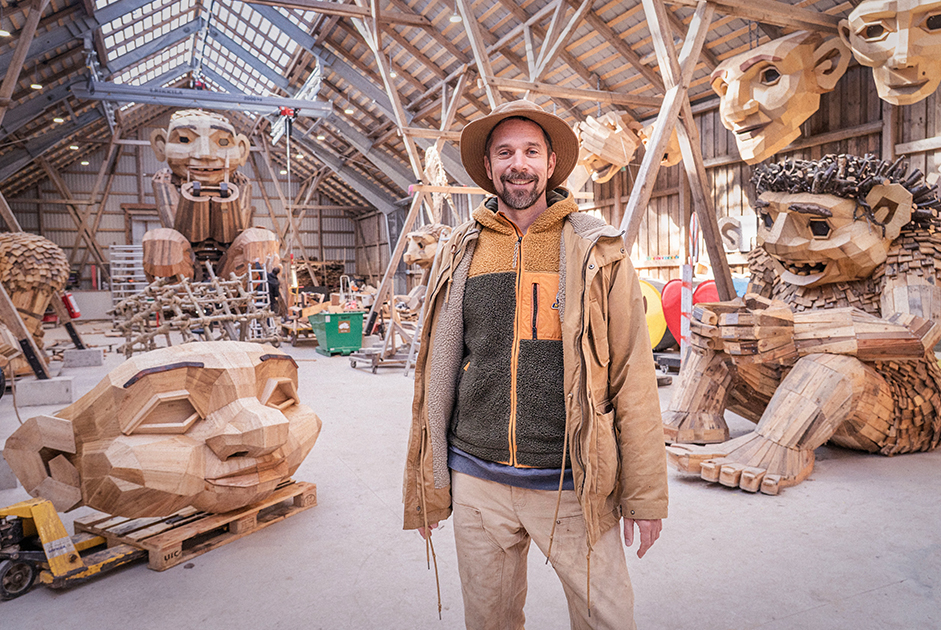
Born in Odense, Denmark, Thomas Dambo grew up building toys, costumes, and treehouses from recycled materials, skills taught by his parents. Before becoming the world’s premier troll-maker, he dabbled in rap music, street art, and scenic design. After earning a master’s degree in interactive design from Kolding Design School, he channeled his creativity into what would become his signature work.
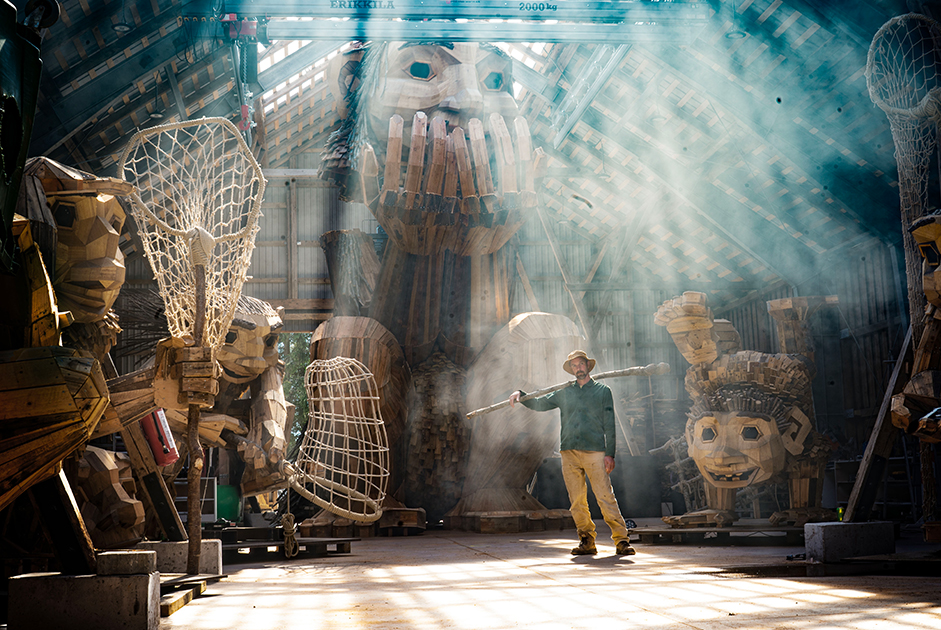
Dambo’s mission is elegantly simple: “Waste No More.” Through his whimsical trolls made entirely from repurposed materials, he demonstrates that discarded items can still hold beauty, meaning, and magic. Every troll is constructed from reclaimed wood, fallen branches, wooden pallets, and other salvaged materials—transforming what others consider trash into towering works of art that can stand up to 25 feet tall.
A Global Phenomenon
With more than 150 trolls installed across five continents, Dambo’s installations attract an estimated 4.5 million visitors annually. His work has been featured by BBC, National Geographic, NPR, and Lonely Planet, turning ordinary parks into international destinations. In Detroit Lakes, Minnesota, the trolls drew approximately 500 to 1,000 visitors per day, while in Victor, Colorado, “Rita the Rock Planter” effectively doubled walk-up tourism.
Community at the Core
What makes Dambo’s process special is the community involvement. Over three weeks, almost 500 volunteers worked together to construct the trolls at Dix Park. This collaborative approach transforms the installation from mere artwork into a shared community experience, with locals literally helping to build the magic that will enchant their neighbors and visitors for years to come.
Bonus Trolls in Asheville
As if seven permanent trolls weren’t enough, North Carolina is also hosting something extra special. From November 15, 2025, through February 17, 2026, the North Carolina Arboretum in Asheville presents “Trolls: A Field Study,” featuring twelve interactive troll sculptures in their U.S. premiere. Standing seven to nine feet tall and affectionately called “Baby Trolls” by Dambo, these curious visitors have arrived on their first North American journey to study humankind. Six of them even participate in the Arboretum’s beloved Winter Lights holiday display, adding an enchanted dimension to Asheville’s brightest tradition.
Why It Matters
In a world increasingly concerned with sustainability, Dambo’s trolls offer more than Instagram moments—they’re philosophical statements about waste, beauty, and our relationship with nature. They invite us to slow down, explore, and see magic in unexpected places. The Asheville installation arrives as western North Carolina works to recover tourism revenue following Hurricane Helene, making these whimsical giants both artistic marvels and economic catalysts.
So whether you are a local resident or planning a visit, consider going troll hunting. These gentle giants are waiting to be discovered, each one holding a piece of a larger mystery—and reminding us that sometimes the most beautiful things come from what we almost threw away.