A child of the 1960s, looking back and forward…
I was born three months after John F. Kennedy was elected president. That makes me part of a generation that grew up with civil rights marches on the evening news, moon landings interrupting summer reruns, and a war in Southeast Asia that pulled our brothers, sons and fathers into uniforms. We were raised in a country that could be magnificent and maddening in the same breath, often on the same Tuesday.
So, when July 4th, 1976, rolled around, I was fifteen years old. I have been driving since February, almost six months. I was old enough to feel the weight of what we were celebrating, young enough to still be fascinated by the fireworks.

And there were fireworks. Operation Sail, established my birth year 1961, by JFK, brought 53 tall ships into New York Harbor, their white sails impossibly beautiful against a hot July sky. The whole country threw itself a party, parades, pageants, a Bicentennial Wagon Train with covered wagons rolling from coast to coast, and everywhere those red-white-and-blue colors on everything from coffee mugs to garbage cans. President Gerald Ford stood at Independence Hall in Philadelphia and declared America “forever young.” We wanted to believe him. Lord, we wanted to believe him.
But 1976 was also just two years removed from Watergate. It was one year after the fall of Saigon. The economy was bruised, gas lines were recent memory, and the country had been through a decade of assassinations and upheaval that none of us fully understood. We celebrated at 200 anyway, because that is one of the most stubbornly American things there is, the insistence on hope in the face of complications, corruption and war.
Now we are approaching 250. July 4th, 2026, will mark America’s semiquincentennial, a word I’ve had to practice saying, and it is arriving with its own complicated political and environmental climate.
The celebration already has a name: America 250, with official events planned across all fifty states and territories. There will be gatherings in Philadelphia and Washington, on the National Mall, and in town squares I couldn’t find on a map. A United States Semiquincentennial Commission has been working since 2016 to organize commemorations that are meant to be, in their words, “the largest birthday celebration in world history.” The Op Sail fleet is expected to return to American harbors again.
Think about what the country has done since that summer I watched fireworks over a fairground in my hometown. In 1976, there were no cell phones, no internet, no streaming services delivering entertainment to a glowing rectangle in every pocket. We had three television networks and a rotary phone. The Berlin Wall stood. The Soviet Union existed. South Africa was under apartheid. The European Union did not yet exist in its current form. China was still in the grip of the Cultural Revolution.
In fifty years, the world has been remade, and America remade itself along with it. The population has grown from roughly 218 million to more than 335 million people. We have elected our first African American president. Women now outnumber men on college campuses and serve at the highest levels of government, business, and the military. Technology has connected every American to every other American and, for better and worse, to every other human being on earth.
We have also, in those fifty years, remained stubbornly, persistently American in our disagreements. The arguments of 2026 are different in their specifics but not entirely different in their nature from the arguments of 1776 or 1876 or 1976. Who counts as a full citizen? What does the government owe the people, and the people the government? How do we remain one country made of many? These questions do not expire.
My generation, the ones who wore mood rings and watched the Bicentennial in bell-bottoms, grew up being told that America was an idea as much as a place. That struck us as either deeply inspiring or slightly evasive, depending on the decade and our mood. But I’ve come to think it’s simply true. A country that has reinvented its economy, absorbed millions of immigrants, fought a civil war and survived it, landed human beings on the moon and brought them back, and still argues passionately about its own soul, that country is genuinely, structurally unfinished. That’s not a flaw. That’s the architecture.
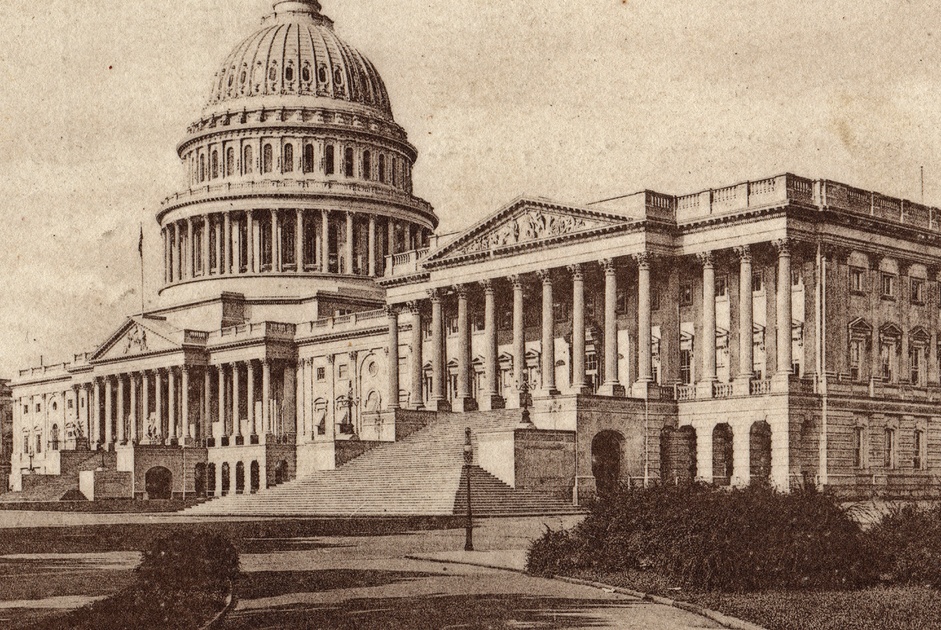
I’ll be sixty-five years old on the Fourth of July 2026. The same age the country was in 1841 Key events in the United States in 1841 include:
- The “Year of Three Presidents”: William Henry Harrison was inaugurated as the 9th President. Just 31 days later, he became the first U.S. president to die in office. Vice President John Tyler immediately took the oath, setting a crucial constitutional precedent that the vice president assumes the full office and title of President, rather than just acting duties.
- The Amistad Case: On March 9, the U.S. Supreme Court ruled that the enslaved Africans who had seized control of the Spanish schooner Amistad were free. Represented by former President John Quincy Adams, the Court determined they had been illegally enslaved.
- The First Emigrant Wagon Train: On May 15, the first organized emigrant wagon train left Independence, Missouri, successfully crossing 1,730 miles over the Sierra Nevada mountain range to arrive in California.
- Literary Milestones: In April 1841, Edgar Allan Poe published “The Murders in the Rue Morgue”, which is widely recognized as the very first modern detective story.
- The First Filibuster: On March 5, the U.S. Senate saw its first continuous filibuster. Democratic senators debated a bill to establish a national bank until March 11 in an attempt to run out the legislative clock. America was still becoming then. It is still becoming now.
There will be fireworks. There will be speeches. Somewhere, a fifteen-year-old will watch the sky light up and feel the fireworks mean something special.
I hope they’re right. I’ve always hoped they’re right.
America’s 250th anniversary is scheduled to be celebrated on July 4, 2026, with events planned nationwide through the America 250 Foundation and the U.S. Semiquincentennial Commission.